“Maybe I just got lucky.”
It’s a thought that quietly crosses the minds of more people than you’d imagine.
You finally crack that competitive exam after months of studying. You land your dream job. Your business starts growing. Your manager praises your work in front of the team.
Everyone around you is celebrating.
But inside?
You’re wondering if you actually deserve it.
You start thinking, “What if they expect too much from me?” or “What if one day they realise I’m not as good as they think?”
If you’ve ever felt this way, you’re not the only one. In fact, many successful people-including CEOs, entrepreneurs, doctors and even public speakers have admitted feeling exactly like this.
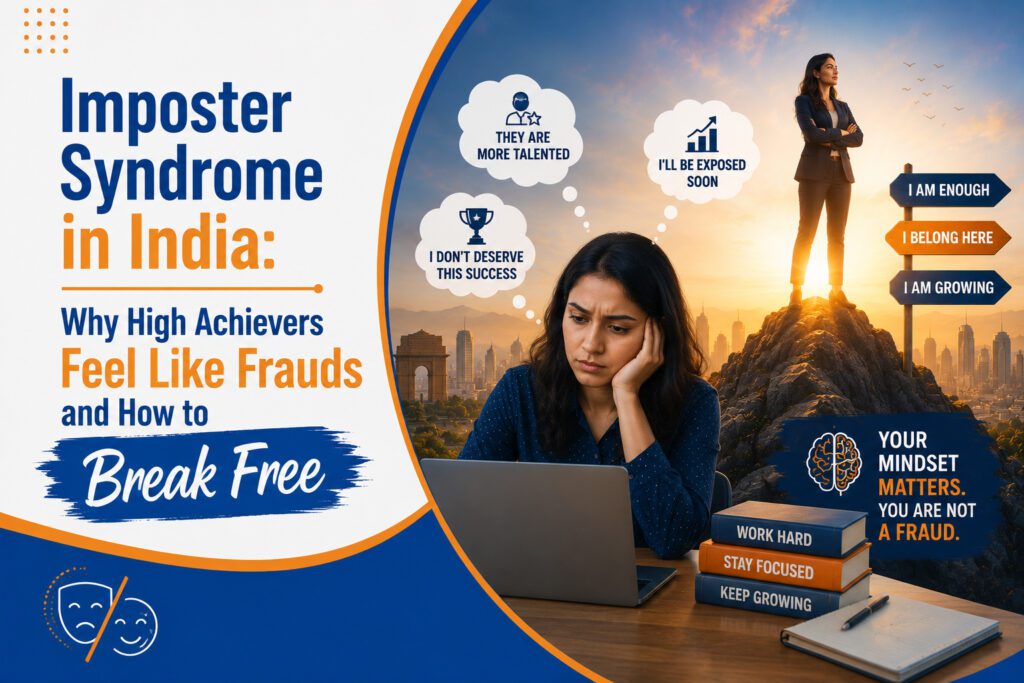
This feeling has a name: Imposter Syndrome.
What actually Is Imposter Syndrome?
Imposter Syndrome is that little voice in your head that refuses to believe you’ve earned your success.
No matter how hard working you are, it convinces you that your achievements happened because of luck, good timing or some other’s support.
In reality, you feel like you are pretending to be more capable than you really are.
The strange part?
Everyone else sees your success except you.
Why Is It So Common in India?
Let’s be honest.
Most of us grew up hearing things like:
“Sharma ji’s son scored higher.”
“You should aim for more.”
“Good isn’t enough. Be the best.”
Without even realizing it, we start believing that our value depends on our tasks we do.
Then adulthood arrives. The comparison doesn’t stop. Instead of marks, we compare salaries. Instead of report cards, we compare promotions. Instead of classmates, we compare ourselves with strangers on LinkedIn and Instagram. Someone is buying a new house. Someone is traveling abroad. Someone is becoming a founder before turning thirty. And suddenly, your own achievements don’t feel “big enough.” That’s exactly where self-doubt quietly begins to grow.
Signs You May Be Dealing with Imposter Syndrome
You don’t need a diagnosis to recognize it.
Ask yourself honestly.
- Do compliments make you uncomfortable?
- Do you think your success was mostly luck?
- Do you feel nervous before every new opportunity, even when you’re qualified?
- Do you keep thinking you’re “not ready yet”?
- Do you work extra hard because you’re afraid people might judge you?
If you’re smiling while reading these questions because they sound familiar, chances are you’ve experienced Imposter Syndrome at some point.
And that’s okay.
It doesn’t mean you’re weak. It means you’re human.
So, How Do You Break Free?
There’s no magic switch. But there are small changes that make a surprisingly big difference.
Stop Waiting to Feel Confident
Here’s something nobody tells us. Confidence usually comes after taking action. Not before. Think about learning to drive. You weren’t confident on day one. You became confident because you kept driving. Life works the same way.
Keep Proof of Your Progress
We’re very good at remembering our mistakes. We’re terrible at remembering our wins. Start keeping a folder where you save appreciation emails, positive messages, completed projects or even small personal victories. Whenever self-doubt shows up, read them.
They remind you of something important:
You didn’t get here by accident.
Stop Comparing Your Chapter 3 with Someone Else’s Chapter 20
Social media rarely shows rejection, sleepless nights, failures or anxiety.
It shows promotions.
Awards, Vacations, Perfect photos.
Remember, you’re comparing your everyday life with someone else’s best moments.
That’s never a fair comparison.
Learn to Say “Thank You”
The next time someone compliments your work, don’t immediately reply,
“It wasn’t a big deal.”
Or
“Anyone could’ve done it.”
Instead, simply smile and say,
“Thank you. I really appreciate that.”
It might not feel comfortable at first but accepting appreciation is healthier than constantly rejecting it.
Make Peace with Mistakes
One mistake doesn’t cancel out years of hard work. One failure doesn’t erase your talent. Every person you admire today has failed at something. The only difference is they didn’t stop because of it.
Confidence Isn’t the Absence of Doubt
Many people believe confident people never question themselves. That’s simply not true. They do. The difference is they don’t let those doubts decide what they can or cannot do. They show up anyway. They try anyway. They learn anyway and that’s how confidence grows.
Final Thoughts
If you’ve been feeling like you don’t deserve your success, here’s something you need to hear today. You are not where you are because of luck. You are here because of your effort, because of the late nights, because of the failures nobody saw, because you kept going even when things became difficult.
The voice in your head may still whisper that you’re “not enough.”
Don’t let it become the loudest voice in your life.
We believe confidence isn’t something you’re born with-it’s something you build, one brave decision at a time. Every challenge you overcome, every lesson you learn and every step you take despite fear is proof that you are far more capable than your doubts would have you believed.
FAQs:-
It’s the feeling that you don’t deserve your success, even though you’ve worked hard for it.
High expectations, constant comparison, academic pressure and social media often make people question their own abilities.
Yes. In fact, many highly successful professionals, entrepreneurs and leaders experience it at different stages of their careers.
Yes, life coach will help you overcoming imposter syndrome. They help you to believe in yourself and make you feel unaffected.
Start acknowledging your achievements, stop comparing yourself with others, accepting compliments and keep acting even when you feel unsure.
No, with self-awareness, healthier thinking habits and consistent practice, it becomes much easier to manage.